

Twelve Dollars a Month: The World Is Quietly Defunding the Rohingya
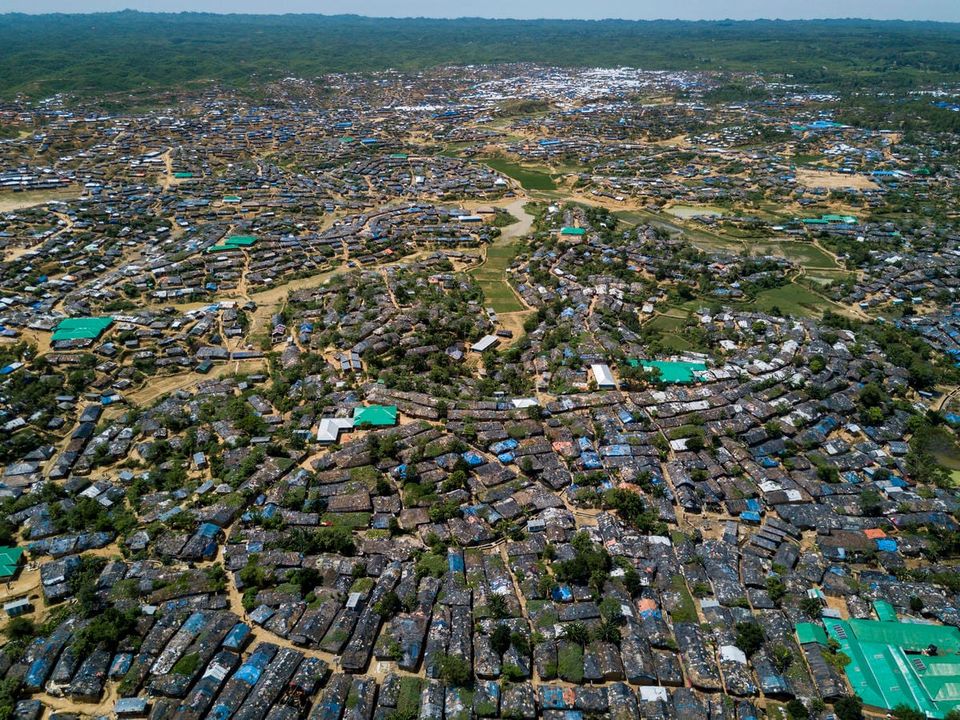
There are two ways to abandon a refugee population. The first is loud: closed borders, deportations, cameras rolling. The second is quiet: a budget line trimmed here, an appeal left unfunded there, a donor conference postponed, until one morning a family of five discovers that the world's compassion amounts to twelve dollars per person, per month.
The Rohingya are being abandoned the second way.
Consider the numbers. The United Nations' 2026 Joint Response Plan for the roughly 1.2 million Rohingya refugees in Bangladesh and the vulnerable host communities around them seeks $710.5 million — itself a contraction from earlier appeals, a budget already trimmed to fit diminished expectations rather than actual need. Even that reduced ask is going unmet: programmes that were about half funded in 2025 are only 19 percent funded this year. The World Food Programme, the lifeline of the camps, has warned that from April it can no longer provide equal monthly food assistance to refugees in Cox's Bazar and on the island of Bhasan Char. Health care, clean water, sanitation and protection programmes are all being scaled back at once.
Twelve dollars a month is thirty-nine cents a day. Hold that figure in your mind as you read on, because everything else in this story is an elaboration of it.
A crisis the world once promised to remember
It is worth recalling how these camps came to exist. In August 2017, Myanmar's military launched a campaign of massacre, rape and village-burning in Rakhine State that drove more than 700,000 Rohingya across the Naf River into Bangladesh in a matter of weeks — joining hundreds of thousands who had fled earlier waves of persecution. The United States has formally determined that what happened constitutes genocide. The Gambia's case against Myanmar under the Genocide Convention is still before the International Court of Justice. The Rohingya remain stateless, stripped of citizenship by Myanmar's discriminatory 1982 law, confined — those who stayed behind — to segregated camps and villages.
In those first months, the world's response was genuinely impressive. Donor conferences were oversubscribed. The camps at Kutupalong grew into the largest refugee settlement on earth, but they were fed, vaccinated and schooled. "Never again," said the communiqués.
Nearly a decade later, the communiqués have stopped and so, increasingly, has the money. This is the familiar arc of every protracted displacement — attention decays faster than need — but the Rohingya case is extreme because the population is unusually dependent. These are refugees who, by law, cannot work formally in Bangladesh, cannot move freely, and cannot return home. Their survival is, almost by design, a function of the international appeal system. When the appeal fails, there is no fallback. The ration card is the economy.
We have run this experiment before
What makes the current cuts inexcusable is that their consequences are not hypothetical. In 2023, funding shortfalls pushed the WFP ration down from $12.50 to $10, and then to $8 a month. Humanitarian agencies documented what followed: child malnutrition climbed in camps where it was already among the worst in the world; women and girls faced sharply higher risks of trafficking and exploitation; families married off daughters early to reduce mouths at the table; and the smugglers' boats filled. The Andaman Sea crossings toward Malaysia and Indonesia — among the deadliest migration routes anywhere — surged as desperation did.
International pressure eventually clawed the rations back. The lesson was supposedly learned: cutting food to a confined, aid-dependent population does not build "self-reliance," it builds catastrophe. That lesson has now been unlearned in under three years, and this time the cuts arrive on top of degraded health services and shrinking protection budgets, in camps where fires, floods and armed-group violence are regular events.
The crisis is growing while the money shrinks
The deeper problem is that this round of austerity coincides with an expanding emergency. Myanmar's civil war has transformed Rakhine State. The Arakan Army now controls most of the state's townships, including nearly the entire border with Bangladesh, and its war with the junta has caught the remaining Rohingya population in the middle — conscripted by one side, displaced by both. Fighting has driven a fresh influx of Rohingya into Bangladesh, adding tens of thousands of new arrivals to camps that were already bursting.
The people fleeing today are running from the same townships, along the same paths, as those who fled the genocide of 2017. The difference is that in 2017 the world was watching. In 2026 it is checking its budget.
This is also why repatriation cannot serve as the donors' alibi. As I have argued before, there is nothing to return to: Rakhine is an active war zone contested between a military that committed genocide and an armed group whose commitments to the Rohingya remain unproven, over villages that in many cases no longer physically exist. The United Nations has said repeatedly that conditions are not conducive to return. Cutting aid in the camps while return remains impossible is not a policy. It is a slow-motion expulsion with no destination.
The failure is collective — and it taxes the wrong country
The immediate trigger for this year's collapse is the retreat of the largest donors, above all the United States, whose broad retrenchment from humanitarian funding has hollowed out appeals across the globe. The Rohingya response, always dependent on a handful of big contributors, was among the most exposed. But the failure is collective. Europe, consumed by its own crises, has not filled the gap. The Gulf states, whose leaders invoke the suffering of Muslim peoples when it is rhetorically convenient, contribute a fraction of what their wealth would allow. Asia's rising powers, so eager for leadership on trade and technology, are absent from this stage. Japan and South Korea give, but not at scale. China, which shields Myanmar diplomatically and holds more leverage in Naypyidaw than any other capital, treats the humanitarian bill as someone else's problem.
And here is what the quiet abandonment misses: this crisis has a host, and the host is not bottomless. Bangladesh — a developing nation managing its own economic pressures — has sheltered more than a million Rohingya for nearly a decade. The cost to the host communities of Cox's Bazar has been real: depressed wages, deforested hillsides, strained services, and a district transformed into the site of the world's largest refugee settlement. That sustained generosity is a global public good, and it deserves to be named as one.
When donors underfund the camps, they are not teaching Myanmar a lesson or nudging refugees toward self-reliance. They are taxing the one country that did the right thing — and converting a contained humanitarian operation into a regional security problem. Hungrier camps mean more trafficking networks, more dangerous boat journeys toward Southeast Asia, more recruitment by the armed groups and criminal gangs that already prey on the settlements at night, and more instability along one of Asia's most sensitive frontiers. The countries declining to fund the response will meet its consequences later, in forms far more expensive than a ration card: interdiction operations, border crises, radicalization risks, and a generation of stateless children — half the camp population is under eighteen — raised on thirty-nine cents a day within sight of a world that promised them "never again."
What must happen now
The prescription is not mysterious, and none of it is beyond the world's means.
First, fund the appeal. The full 2026 Joint Response Plan — $710.5 million — is a rounding error against what the international community spends on a week of its wars. Restoring the WFP ration to a level a human being can live on must come first, before April's cuts harden into the new normal and the 2023 catastrophe repeats itself at larger scale.
Second, expand third-country resettlement. The trickle of departures to date is an embarrassment for every state that claims to champion refugee rights. Resettling even the most vulnerable — survivors of torture, female-headed households, the chronically ill — would relieve pressure and restore a measure of hope in camps where hope is the scarcest commodity.
Third, use leverage where it actually exists. The states with influence over Myanmar's warring parties — China above all, but also ASEAN, India and the Gulf — should press both the junta and the Arakan Army toward the only durable solution: citizenship, security and dignity for the Rohingya in their own homeland, verified not by promises made at summits but by conditions on the ground. Any future political settlement for Rakhine that does not include the Rohingya as citizens will simply schedule the next exodus.
The 2017 genocide was Myanmar's crime, and its architects should meet justice at The Hague. But the starvation of the survivors, a decade later, will be harder to pin on a single villain. It is being authored now, in a thousand quiet budget meetings where the Rohingya have no seat — by everyone who looked at the appeal, and looked away.
Member discussion