

South Asia’s Next Crisis May Be About Water, Not Borders
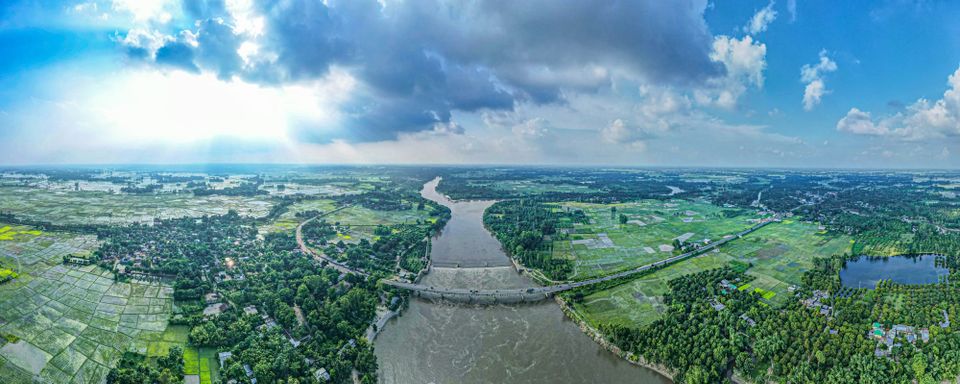
South Asia's economic and social well-being have always been based upon the river. From the Indus in Pakistan to the Ganges and Brahmaputra in Bangladesh and India, water is tied to farming, electricity, transport and daily life itself. But these rivers are turning from being just natural resources today. They are gradually becoming political weapons.
For decades, South Asian nations battled over borders, religion and territory. Now, another threat lurks quietly in the background: water insecurity.
These days climate change, population growth, dam developments and political mistrust are pushing the region to a future when water disputes may become among the region’s greatest threats to stability.
The warning signs are already clear.
Severe floods in Bangladesh last year led to anger and blamed sudden water releases upstream from India’s Tripura region as a contributing factor. India denied the allegations, claiming heavy rains triggered the floods. Nonetheless, the episode generated political resentment and reignited old arguments about the fairness of sharing rivers among the neighboring nations.
The problem is much larger than a single flood.
Bangladesh and India both share 54 rivers, but they have a formalized water-sharing agreement for only one—the Ganges. The Ganges treaty itself is set to expire in 2026, and experts argue that this was meant for a different era. The agreement was meant to occur before climate change made river flows unpredictable. Warmer temperatures, melting Himalayan glaciers and erratic monsoon seasons are already changing the way the region moves its water.
Pakistan has a comparable difficulty.
Pakistan’s agriculture and economy are built on the Indus River. But relations between India and Pakistan are still deeply unstable. In response to tensions between both, India temporarily suspended parts of the Indus Waters Treaty, one of the world’s oldest water-sharing agreements. Pakistan warned that curtailing the flow of water could endanger millions of lives and damage the economy.
Water is no longer just being considered an environmental issue. It’s now becoming a strategic issue.
Even political leaders have begun to talk about rivers in terms of national interest and control. Such a language induces fear in adjacent countries relying on upstream water sources.
At the same time, the population of South Asia continues to grow. More people require more water — for farming and factories and cities. However, supply is becoming less reliable.
In many areas groundwater levels are falling quickly. Farmers at present find themselves in hard times during dry months. Floods devour crops in the monsoon months. There are drinking water shortages in urban areas, and they are leaving rural communities behind.
The Maldives is seeing a fresh type of water crisis. Increasing sea levels and saltwater intrusion are impacting freshwater supplies across the island nation. For some countries in the region, climate change is rendering water insecurity a matter of survival.
The threat is not just of competing states. Water shortages are also a catalyst for political unrest inside countries.
When crops fail, prices of food climb. Migration spikes when people lose income. When governments don't handle essential resources right, young people become frustrated. On fragile political grounds, these pressures can rapidly escalate into protests and further instability.
Political polarization and economic pressure are already problems for South Asia. The problems could be exacerbated by water scarcity.
Yet cooperation remains weak.
Most water agreements in the area were established several decades earlier. Many no longer reflect realities of the climate today. Some rivers don’t have agreements at all. And governments lack enough trust to allow for long-term cooperation.
This is dangerous, it turns out, because rivers do not necessarily flow politically.
No country in South Asia can solve this problem alone. Floods in one country start in another. Upstream construction of dams harms farmers downstream. Climate change affects the entire Himalayan river system.
The region requires greater cooperation before such crises are no longer manageable.
Countries ought to modernize outdated treaties, strengthen flood alarm systems and share water data more openly. Water security should be taken as seriously by local government bodies as trade or defense. Scientific collaboration should take precedence over political competition.
Bangladesh was the first South Asian country to join the United Nations Water Convention. That move could promote greater regional conversation about the fair management of water.
The rivers of South Asia have linked civilizations for centuries. They sustained agriculture, trade and human settlement long before we have modern borders.
But if political suspicion only grows higher as water becomes less of a resource, these very rivers may become conflict regions.
There’s still time for the region to sidestep that fate. But the warning signs are growing harder to ignore.
Member discussion